Motorcycles on ferries: strapping down, gear and boarding order
A motorcycle crosses for roughly 50 to 70 percent of a car fare and boards before cars, but it has to be strapped down...
 Fabrice Dejean7 min readMay 21, 2026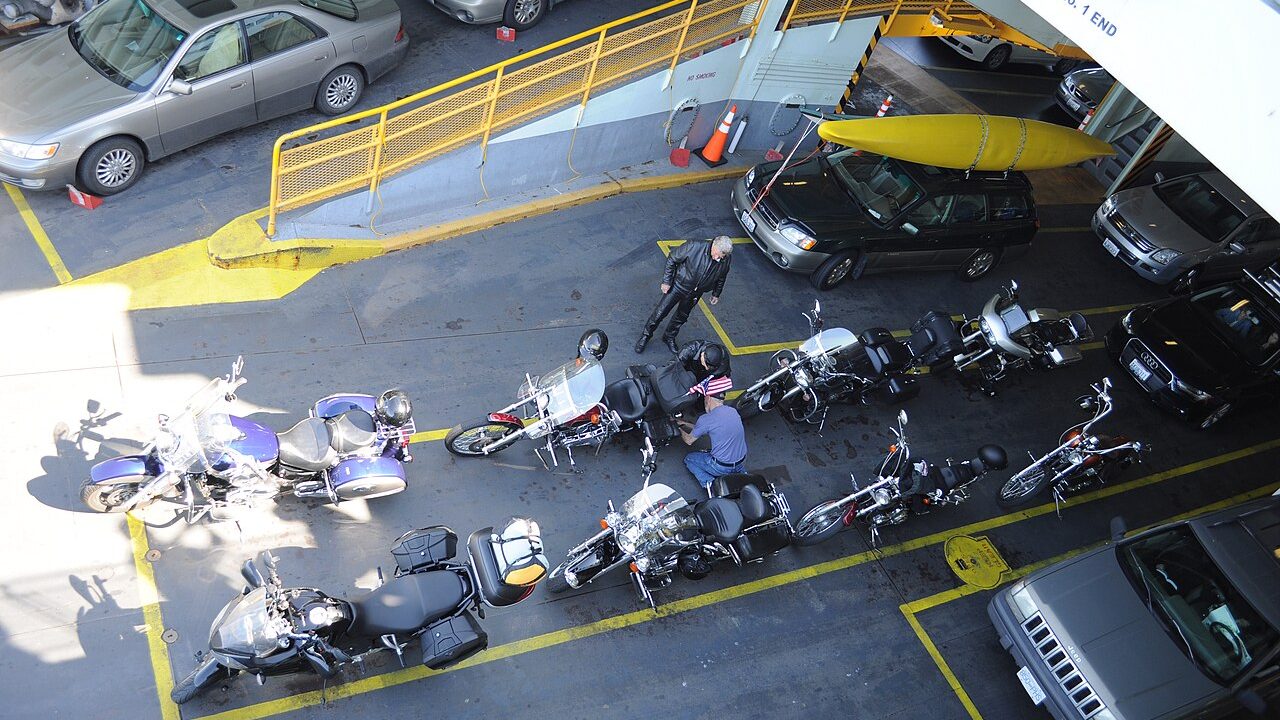
A motorcycle crosses for roughly 50 to 70 percent of a car fare and boards before cars, but it has to be strapped down by you or by the crew, and the method matters more than the price. Get the strapping wrong and you collect a scratched fairing at the other end.
The rules differ by operator: some provide straps and crew, some expect you to bring your own, and a few require both. Ask at booking rather than at the ramp.
What it costs
Dover to Calais: 45 to 70 return for a motorcycle and rider, against 90 to 150 for a car.
Irish Sea: 70 to 110 return, against 150 to 260 for a car. The ratio is similar across routes.
A pillion passenger is usually included in the motorcycle fare or charged at the foot passenger rate. Check which, because the difference is 30 to 50.
Trailers carrying motorcycles are priced as a trailer plus a vehicle, which is usually more expensive than riding the bike on.
Strapping down: the two schools
Crew-strapped
On many Channel and North Sea ships, the crew strap the bike using the ship’s own ratchet straps and a front-wheel chock. You are asked to leave it in gear and on the side stand.
This is generally reliable, but the crew strap dozens of bikes in an hour and the tension varies. Check the straps before you leave the deck.
Owner-strapped
Some operators expect you to bring your own straps and secure the bike yourself. Two straps from the handlebars or triple clamps down to the deck rings is the usual method.
Do not strap to the mirrors, the fairing or the exhaust. Those are the three points that break.
How to strap a bike properly
Compress the front forks by about a third, not fully. Full compression damages fork seals over a crossing and does nothing extra for stability.
Use two straps at the front, pulling forward and outward, and one or two at the rear pulling backwards. The bike should not be able to move forward, back or sideways.
Leave the bike in first gear and on the side stand if the deck is flat. On a sloping deck, use the centre stand only if the crew ask for it.
Check the straps after ten minutes if you are allowed back on the deck. Most operators do not allow it, which is why the initial strapping matters.
What to take off the bike
Take your helmet, jacket, gloves, tank bag and any electronics with you. The deck is inaccessible and the ship is not liable for theft.
Panniers and top boxes can stay if they are locked. Soft luggage should go with you, because straps can crush it and rain can reach the deck.
Leave the disc lock off. If the bike moves slightly, a disc lock can damage the caliper or the disc.
Take the key. Some operators ask for it, and you will need it at the other end regardless.
Boarding order and the ramp
Motorcycles usually board after cars on the Channel and before cars on some Irish Sea routes. Follow the marshal rather than the queue.
You ride the bike on and off, but not while the ship is moving. On board, push it into position with the engine off.
The ramp is often steel and wet. Ride slowly, in a straight line, and do not touch the front brake on the transition.
On arrival, wait for the deck hands to signal. Bikes are usually unloaded first, which is one of the advantages of the fare.
Weather and comfort
Riding to the port in rain and then sitting in wet gear for four hours is miserable. Most ships have a drying room or a warm lounge; ask.
Change into dry clothes before boarding if you can. A ferry terminal toilet is adequate for that.
On overnight crossings, a cabin is worth the money for a rider in wet gear. A reclining seat in damp textiles is a poor night.
Bring a lock for your helmet if you plan to leave it with the bike, and take the visor with you.
Insurance and breakdown cover
Check that your insurance covers the bike on a ferry deck. Most policies do, but theft from an unattended vehicle deck is often excluded.
European breakdown cover should cover the bike at the far end, not just in the UK. Read the territorial limits before you travel.
Take photographs of the bike on the deck before you leave it, including the strapping. If damage occurs, the photos are your evidence.
Report any damage to the operator before leaving the port. Claims made a week later are much harder to pursue.
Groups and rallies
Groups of ten or more bikes are booked as a group and loaded together, which is more efficient than arriving separately.
Group bookings often get a 10 percent discount and a dedicated lane. They also require a deposit and a firm passenger list.
Riding in convoy onto the deck is not allowed. Bikes are loaded one at a time with a gap between them.
Agree a meeting point on the ship before boarding. The vehicle deck empties in a rush and groups get separated.
Gear and luggage on a bike
Everything you need on the crossing comes off the bike: helmet, jacket, gloves, tank bag and any electronics.
Hard panniers can stay if they lock. Soft luggage should come with you, because it will be compressed by straps and exposed to spray.
Do not leave a phone mount or a satnav on the bike. They are the first things taken from an unattended deck.
Carry a small bag for the passenger areas. The walk from the deck is long and there is nowhere to put things down.
The pillion question
Most operators include a pillion in the motorcycle fare, some charge the foot passenger rate, and a few charge a supplement.
Ask at booking rather than at the gate. The difference is 30 to 50 and the answer is not on the website.
A pillion changes the strapping. The extra weight compresses the rear suspension, so the rear straps need less tension.
Two people on one bike also means two helmets and two jackets to carry up. Plan for it before you board.
Overnight crossings on a bike
A cabin is worth more on a bike than in a car, because wet gear and a shared lounge are a bad combination.
Book the cabin at the same time as the ticket. Reclining seats fill first on the cheap fares.
Ask about a drying room at check-in. Most North Sea ships have one and most riders do not know it exists.
Take a change of clothes in a dry bag. Riding off a ship in damp textiles for four hours is the worst part of a bike trip.
Damage and claims
Photograph the bike on the deck before you leave it, including the straps and the space around it.
Photograph it again on arrival before you ride off. If there is damage, the second set of photos is the evidence.
Report damage to the operator before leaving the port and ask for a damage report number.
Claims made by email a week later rarely succeed. The report at the port is what makes them possible.
Group travel and rallies
Groups of ten or more bikes book together, get a dedicated lane and usually a 10 percent discount.
They also need a deposit and a firm list, which is more administration than most riding clubs expect.
Agree a meeting point on the ship before boarding. Bikes unload fast and groups rarely stay together otherwise.
Ride on one at a time. Convoy loading is not permitted on any operator, and the ramp is not a place to bunch up.
What to check before you book
Confirm whether straps are provided and whether the crew will fit them. This single question determines what you pack.
Confirm the pillion policy and whether a second person is included or charged separately.
Check the weather for the crossing, not just for the ride. A force 7 on a two-hour crossing is manageable; on a fast catamaran it is not.
Book the return at the same time. Motorcycle space is rarely the constraint, but one-way fares are priced high enough to make it worth it.