Portsmouth to Caen or Cherbourg: choosing between the two Normandy landings
Portsmouth to Caen suits drivers heading to Brittany, the Loire or western Normandy, while Portsmouth to Cherbourg suits anyone whose destination is the Cotentin...
 Fabrice Dejean7 min readJun 1, 2026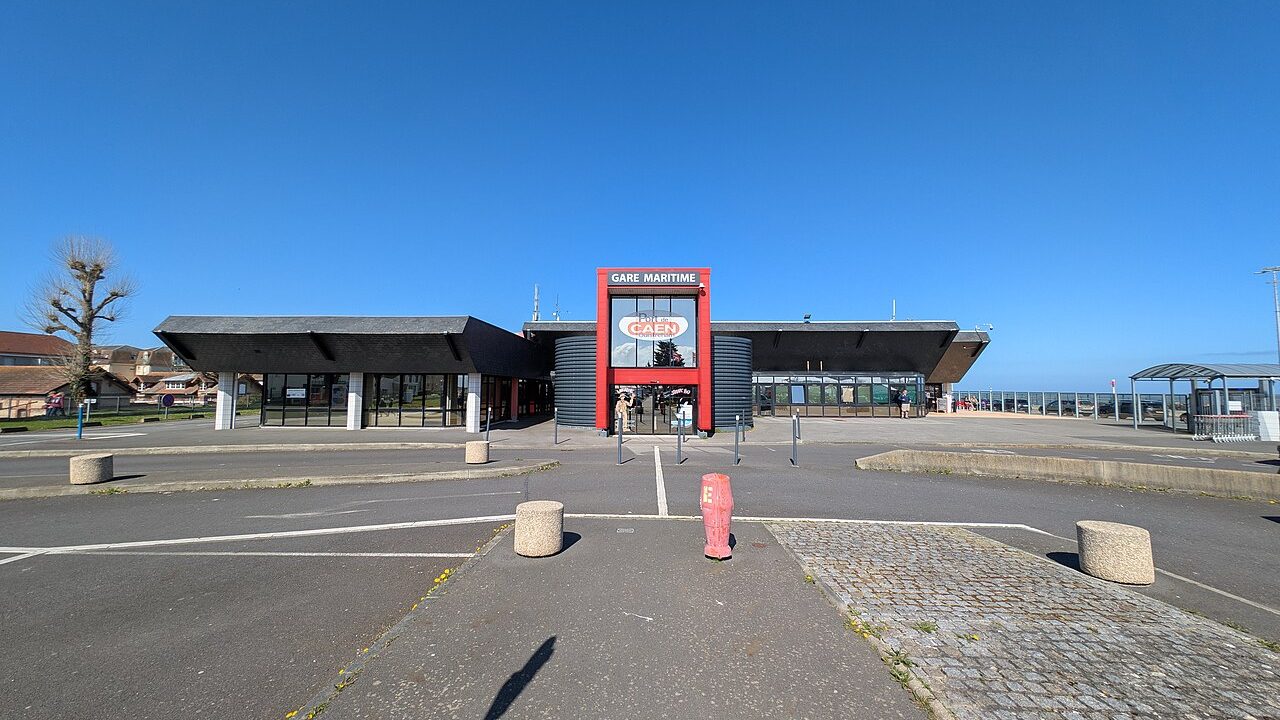
Portsmouth to Caen suits drivers heading to Brittany, the Loire or western Normandy, while Portsmouth to Cherbourg suits anyone whose destination is the Cotentin peninsula or the road south towards Saint-Malo. The two crossings are the same operator, the same kind of ship and often the same price, so the choice comes down to geography and sailing time.
Both run overnight for most of the year, which makes them a way of converting a hotel bill into a cabin bill. Both take around six hours to Caen and five to Cherbourg.
The geography, stated plainly
Caen, properly Ouistreham, sits at the mouth of the Orne and connects to the A13 towards Paris and the A84 towards Rennes. It is the better landfall for anything south or west of Normandy.
Cherbourg sits at the tip of the Cotentin peninsula, 70 miles further west along the coast. It is the better landfall for Saint-Malo, the Channel Islands and the western tip of Brittany.
If your destination is Bayeux, Caen wins by 50 miles. If it is Granville or Mont-Saint-Michel, Cherbourg wins by 40.
The sailings and what they cost you in time
Overnight to Caen
The overnight typically leaves Portsmouth between 22:00 and 23:00 and arrives at Ouistreham around 06:30 local time. You sleep through the crossing and drive off at breakfast.
Daytime sailings exist in summer, usually leaving late morning and arriving mid-afternoon. They are useful for passengers who cannot sleep on a ship.
Overnight to Cherbourg
The Cherbourg overnight usually departs around 22:30 and arrives at 06:45. The crossing is an hour shorter, which in practice means an hour more sleep.
Fast craft ran this route in the past and no longer do. Everything now moves at conventional speed, which is better for anyone prone to seasickness.
Daytime and seasonal extras
Summer adds afternoon departures to both destinations, and a fast ferry to Cherbourg has appeared and disappeared from the schedule more than once. Check the current season rather than an old timetable.
Cabins: the part that decides the fare
A cabin is not optional on a night crossing if you want to arrive functional. The cheapest inside cabin sleeps two and costs 60 to 110 depending on the season and how early you book.
Outside cabins with a window cost 20 to 40 more. For a six-hour crossing in the dark the window adds nothing, so the inside cabin is usually the sensible buy.
Reclining seats exist and are cheaper, but they are in a shared lounge with lights on and people moving all night. On a crossing this length, the saving rarely feels worth it.
Four-berth cabins suit families. They cost more than two berths but less than two cabins, and children sleep better in a room with a door.
What the ships offer
These are large cruise-style ferries with restaurants, a bar, a shop and lounges. The evening meal service starts soon after departure, and breakfast starts about 90 minutes before arrival.
Food is charged separately and is not cheap. A main course runs 15 to 22 and breakfast around 12. Passengers who bring their own food save 30 to 50 a head, and there is no rule against it.
The shop sells alcohol at duty-free prices on the French route. The saving is real but modest, and the allowance is enforced at the border rather than at the till.
Price comparison against Dover
A car with two passengers and an inside cabin costs roughly 250 to 400 return in low season. That is double a Dover return, but it includes a night’s accommodation for two people.
Set against a Dover crossing plus a hotel in Normandy, the two options come out close. The ferry wins when the hotel would be a budget chain on a motorway; Dover wins when you were going to stay somewhere you actually wanted.
Foot passengers pay 60 to 110 return. Without a cabin the crossing is uncomfortable at night, and the seat-only fare is not the bargain it looks.
Boarding at Portsmouth
Portsmouth has several terminals and the Brittany Ferries check-in is at the Continental Ferry Port, west of the city centre. The entrance is off the M275 and is signposted separately from the Isle of Wight services.
Check-in closes 60 minutes before departure for cars, and the port asks drivers to arrive 90 minutes early for overnight sailings because of the volume of vehicles.
Foot passengers check in at the terminal building and walk on through a covered walkway. Arriving 45 minutes before departure is enough, though 60 is safer in summer.
Arriving in France at dawn
Both arrivals land you on the road before 07:00, which is a useful head start. Fuel stations near the ports open early, and the first 60 miles are usually clear.
The risk is arriving too early for your accommodation. A gîte that checks in at 16:00 leaves nine hours to fill, and that is a planning problem rather than a ferry problem.
Breakfast on board solves part of it. A slow drive with a stop at a market town solves the rest.
Cabins, recliners and the seat-only option
Reclining seats are in a shared lounge with dim lighting and no door. They cost 10 to 20 and are the cheapest way to cross overnight.
They are also the reason many passengers arrive tired. If you are driving more than two hours the next morning, take a cabin.
Cabins are sold per unit rather than per person, so a family of four in a four-berth cabin pays less than four reclining seats on some fares.
Pets on the Normandy route
Dogs travel in the car on some sailings and in kennels on others, depending on the ship and the deck. The operator assigns the arrangement at check-in.
Pet cabins exist on this route and sell out months ahead in summer. They cost 30 to 60 on top of a standard cabin.
The animal needs a microchip, a rabies vaccination and the correct travel document. The border checks the document, and a missing stamp means the pet does not sail.
Sunday night and the return crush
Sunday evening is the busiest return sailing of the week, and the vehicle deck fills first. Book the return before you book the outbound if your dates are fixed.
Arriving without a booking on a Sunday in August means waiting for the 23:00 departure at best. In winter it means waiting until Tuesday.
If your plans are loose, book a weekday return and drive back on Monday morning. The fare is lower and the port is quiet.
Where to eat before you sail
Portsmouth has a cluster of pubs and restaurants around Old Portsmouth, ten minutes from the terminal. Gunwharf Quays has more choice and more parking.
Ouistreham and Cherbourg both have restaurants near the port that open early, which matters when you arrive at 06:30 and want breakfast.
Eating ashore is cheaper than eating on board by roughly a third, and the quality is better at both ends.
What the drive south actually costs
From Ouistreham, the A13 to Paris carries tolls of about 25, and the A84 to Rennes is toll-free for most of its length.
From Cherbourg, the road to Saint-Malo is free and fast, and the road to Caen is a mix of dual carriageway and single carriageway.
Fuel is 10 to 15 percent cheaper in France than in the UK, so filling up after disembarking is worth the stop.
Which one to book
Open a map, mark your destination, and measure the drive from Ouistreham and from Cherbourg. Take the shorter one unless the difference is under 30 miles.
Then check the sailing times for your date, because the two routes do not always run on the same nights. In winter, one of them may not sail at all on a Tuesday.
Book the cabin at the same time as the car. Cabins sell out before vehicle space does on summer weekends, and a night crossing without a cabin is a long night.