Dover to Calais ferry timetables: how the 90-minute crossing really works
Dover to Calais is still the quickest way to put a car on the far side of the Channel, and the timetable is almost...
 Fabrice Dejean8 min readAug 3, 2026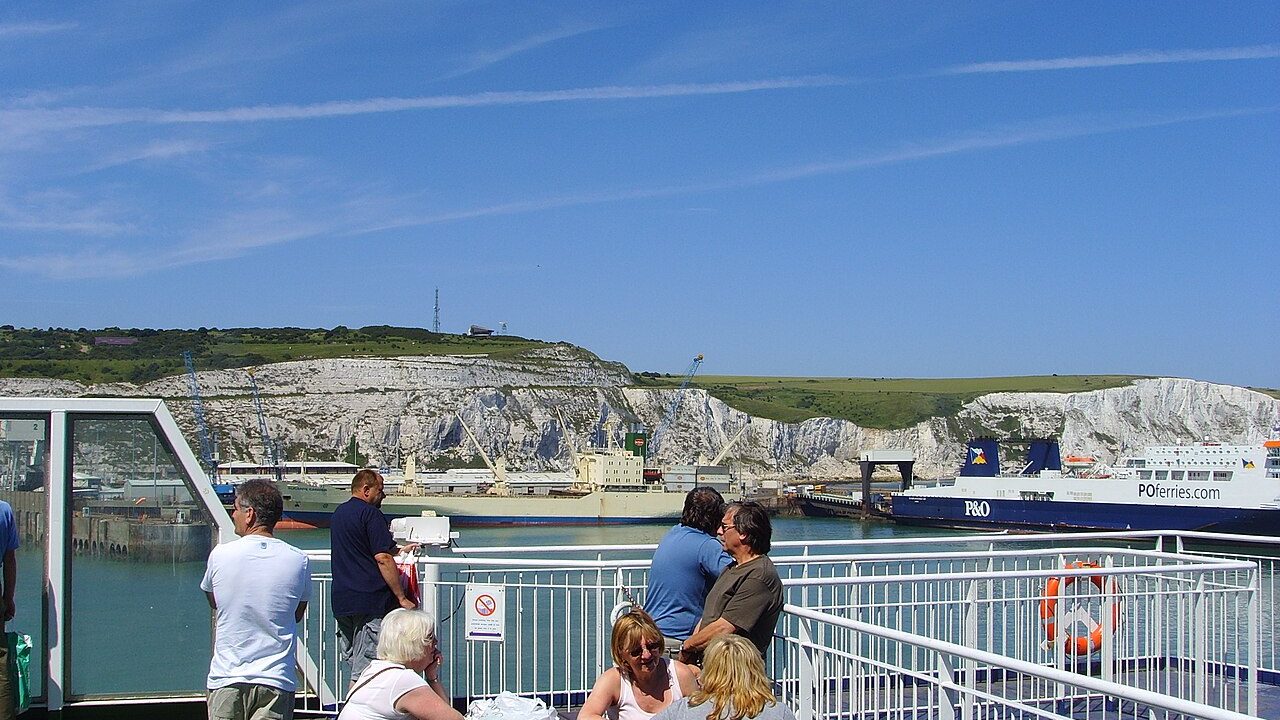
Dover to Calais is still the quickest way to put a car on the far side of the Channel, and the timetable is almost never what slows you down. Sailings leave both ports every 30 to 50 minutes through the day, so the schedule bends around you rather than the other way round. What decides whether you make the boat is the check-in window, which closes 60 minutes before departure for vehicles.
That single number changes how the route should be planned. Most drivers compare sailing times and ignore the hour before them, then arrive at the port with 25 minutes to spare and watch their booking expire.
What the crossing actually consists of
The advertised time of one hour and thirty minutes measures water, not journey. From the moment your ticket is scanned to the moment your wheels touch French tarmac, plan on two and a half hours.
The extra hour is made of border control, lane assignment, ramp loading and disembarkation. On a busy Friday afternoon the queue for French passport checks alone can take 25 minutes before you reach the lane.
The four operators, and how they differ
P&O Ferries
P&O runs the highest frequency on the route and prices itself as the volume option. Its ships carry both freight and cars, and the vehicle decks are loaded tight.
For a family car in low season, a return booked three weeks ahead typically lands between 120 and 200. Turn-up-and-go fares are far higher, and the difference is not small.
DFDS
DFDS sails the same crossing with a similar timetable and competes directly on price. Its quiet-hour departures, usually between 10:00 and 15:00, are often the cheapest sailings of the day.
The trade-off is fewer departures late at night. If your plan depends on a 02:00 sailing, check the day of the week before you build an itinerary around it.
Irish Ferries
Irish Ferries entered the route later and runs a smaller number of daily crossings, generally with newer tonnage. Cabins are available on some sailings, which is unusual for a 90-minute hop.
Its pricing sits between the two larger operators. Where it wins is on flexible tickets, which are often cheaper than P&O’s equivalent.
Freight-only and unaccompanied options
Several operators sell unaccompanied vehicle space, where the car crosses without you. This suits a second vehicle, a van being repositioned or a motorcycle being shipped.
It is not a passenger product, and the paperwork is different: you hand the vehicle over at a freight office and collect it on the other side.
Reading the timetable without being misled
Ferry timetables are published in local time, which means the same clock on both sides of the Channel. That is convenient, but it hides the fact that Dover and Calais sit in different time zones.
In summer, a 14:00 departure from Dover arrives at 16:30 local French time, which is 15:30 on your watch if you have not changed it. Drivers who forget this usually misjudge their onward drive by an hour, in the direction that matters.
Overnight sailings are the other trap. A 23:59 departure and a 00:30 departure look close together on a printed schedule but sit on different days, and the booking system will not forgive the confusion.
How far ahead the timetable is fixed
Peak-season schedules are published in the autumn before, and they rarely change. Off-peak schedules are adjusted twice a year and can shift by 30 or 40 minutes.
The timetable you read in January for an October crossing may still be provisional. If a specific sailing time matters to your plan, book a flexible ticket and recheck two weeks out.
What the crossing costs once extras are added
The headline fare is per vehicle, not per person, which is why the route looks cheap for a full car and expensive for a solo driver. Two adults and two children in one car pay the same base fare as one adult alone.
Then the extras arrive. A roof box may trigger a height surcharge, a trailer adds a length charge, and a dog adds a pet fee of roughly 20 to 30 each way. None of these appear in the first price you see.
When the tunnel is the better answer
The rail shuttle takes 35 minutes and runs 24 hours a day, which means it wins on any trip where timing is tight. It also wins when the sea is rough, because the tunnel does not care about weather.
It loses on price for a full car in low season, where a ferry can undercut it by 40 to 60 percent. It also loses on the experience: there is no deck, no view and no break in the drive.
Drivers with dogs usually prefer the ferry, because pets stay in the vehicle on the shuttle and in designated areas on the ship, and the rules differ on both.
Timing the drive to the port
Dover sits at the end of the M20, and the last 20 miles can be the slowest of the trip when freight traffic backs up. Allow an extra 40 minutes on weekday afternoons and Friday evenings.
If you are early, the port holds you in a staging lane rather than letting you board an earlier sailing. Some operators allow a free move to an earlier departure, but only if space exists and only on flexible tickets.
Border checks and the hour they consume
Since 2021 the French border is checked on the British side, which means passport control happens before you reach the ship. In peak periods this is the single longest part of the process.
Carry the documents in the car, not in the boot. Passports for every passenger, the booking reference and, for pets, the animal’s paperwork should be within reach of the driver’s seat.
Food restrictions matter too. Fresh dairy and meat products cannot cross into the EU, and a car picnic will be confiscated at the checkpoint if it is inspected.
The weekday rhythm nobody mentions
Freight sets the shape of a Dover weekday, not tourists. The heaviest lorry volumes run from 04:00 to 08:00 and again from 16:00 to 20:00, and the car lanes share the same access roads.
A mid-morning sailing on a Tuesday is the calmest crossing of the week. The same sailing on a Friday in July is a different port entirely.
Sunday evening is the worst time to come back. Everyone who left on Friday returns at once, and the 18:00 to 22:00 window books out first.
If you miss the sailing
Operators usually move you to the next departure with space, and most charge the difference between your fare and the turn-up fare. On a cheap ticket that difference can be larger than the original price.
Flexible fares remove the charge entirely, which is why they cost 15 to 30 more. If you are driving more than three hours to reach Dover, buy one.
Missing the last sailing of the day is a different problem. You will be rebooked onto the first boat the next morning, and the port does not offer overnight accommodation.
Caravans, trailers and long vehicles
Anything over six metres is priced in a length band, and a caravan plus a car is measured as a single unit. Declaring it at booking is cheaper than declaring it at the gate.
Loading is by ramp and the deck hands direct you into a lane. Caravans are usually loaded last and unloaded first, which adds 15 minutes at each end.
Height matters as much as length. A caravan with a roof vent typically clears the deck ceiling, but a tall 4×4 with a roof box and a raised suspension may not.
What to have in the car at the barrier
Three things: passports for every passenger, the booking reference on a screen or a printout, and the vehicle registration matching the booking.
A registration that does not match is the most common reason a car is sent to the ticket office. Changing it online takes two minutes and can be done up to departure.
Keep the pet paperwork in the same envelope. It is checked at the border, not at the booth, and digging through a packed boot holds up the whole lane.
Booking the crossing in the right order
Decide the arrival time you actually need in France, then work backwards through disembarkation, the crossing, check-in and the drive to Dover. That gives you the latest sailing you can accept.
Book the sailing before that one. The 30-minute buffer costs nothing and absorbs the traffic you cannot predict, and it is the difference between a relaxed crossing and a missed one.