Holyhead to Dublin: ferry timetables, check-in and the fast catamaran option
Holyhead to Dublin is the shortest and busiest crossing between Britain and Ireland, and it is the one to take if your destination is...
 Fabrice Dejean7 min readJul 21, 2026
Holyhead to Dublin is the shortest and busiest crossing between Britain and Ireland, and it is the one to take if your destination is Dublin, the east coast or anything on the M50. Two operators run it, one with conventional ships and one with a fast catamaran, and the difference between them is more than speed.
The conventional crossing takes three hours and 15 minutes. The fast catamaran takes two hours and 15, but it runs a thinner timetable and cancels in weather that the big ships shrug off.
The two operators
Stena Line
Stena runs the larger ships and the higher frequency, with up to four sailings a day in each direction. Its fast craft, the Stena Express, cuts the crossing to just over two hours in summer.
Fares for a car with two passengers usually run 180 to 300 return. Foot passengers pay 40 to 80 return, which makes it one of the cheapest ways to reach Dublin.
Irish Ferries
Irish Ferries runs the Ulysses and the W.B. Yeats, both large conventional ships with extensive facilities. Its schedule is slightly thinner and its prices are usually within 20 of Stena’s.
Its fast craft, the Dublin Swift, runs seasonally and takes about two hours and 15 minutes. It is faster than the conventional ship and less comfortable in a swell.
Fast craft versus conventional ship
The fast catamaran saves an hour each way, which matters on a day trip or a weekend. It also has a rougher ride, less deck space and a smaller shop.
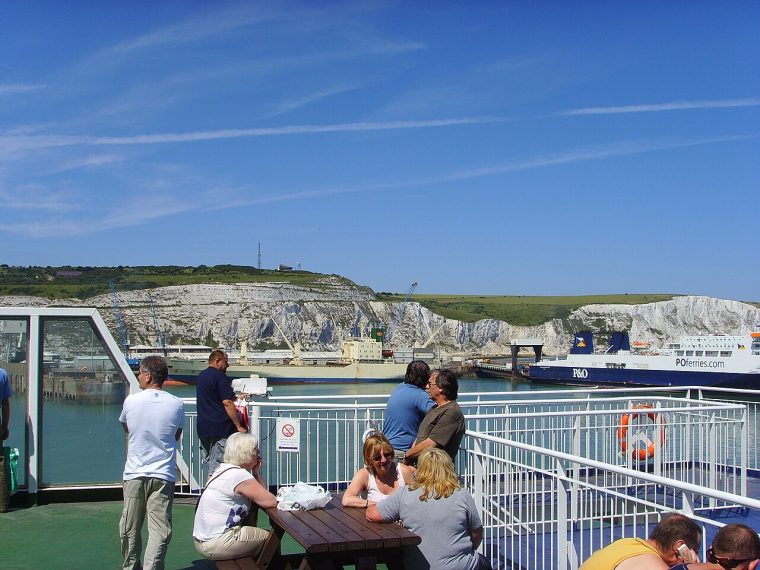
The conventional ship has cabins on some sailings, a proper restaurant, lounges and outside decks. On a three-hour crossing, that makes the time pass more easily.
Fast craft are also more weather-sensitive. A force 6 in the Irish Sea will keep the catamaran in port while the conventional ship sails, and the operator will move you to the next available sailing rather than refund you.
Holyhead port
The terminal sits on Holy Island, at the end of the A55 and the A5. From the Britannia Bridge on Anglesey it is a 25-minute drive, and the last stretch is a dual carriageway with a single roundabout.
Check-in closes 60 minutes before departure for cars. The port asks for 90 minutes in peak season because the vehicle lanes are shared with freight and the queue backs onto the access road.
Foot passengers check in at the terminal and board through a covered walkway. Holyhead railway station is adjacent, which makes the route practical without a car.
There is a long-stay car park for foot passengers, charged per day. It fills on Friday mornings in summer.
Dublin port
Dublin Port is two miles from the city centre, and the terminal depends on the operator. Stena uses Terminal 2, Irish Ferries uses Terminal 1, and both are off the same access road.
Border control is on the Irish side. Passports are checked for everyone, including British citizens, and the queue for foot passengers can be slower than the queue for cars.
Getting into the city is easiest by taxi, around 15 to 20, or by the 53 bus. There is no tram or train from the ferry terminals.
Fares and the extras
The base fare is per vehicle, so a full car is good value and a solo driver is not. Two adults with a car pay the same as one adult with a car on most fares.
Extras are modest compared with the Channel. A dog costs around 20 each way, a roof box may add a height band, and a trailer adds a length charge.
Cabin supplements exist on the night sailings and are worth taking. The crossing is short enough that a reclining seat works, but a cabin makes the arrival much better.
Night sailings
Both operators run late departures that arrive after midnight or before dawn. These suit drivers who want to use a full day on either side.
The night crossing is also cheaper. Fares drop 20 to 30 percent on the 02:00 and 03:00 departures, which is real money on a family booking.
The trade-off is arrival time. Reaching Dublin at 05:30 means waiting for a hotel to open, and the terminal area has little to offer at that hour.
Driving in Ireland
Distances are shorter than they look on a British map, but the road network is thinner once you leave the motorways. Dublin to Galway is 130 miles and takes about two and a half hours on the M6.
Dublin to Belfast is 100 miles on the M1 and takes about two hours. The border is open, and there are no checks on the road.
Fuel is priced in euros and is broadly similar to UK prices. Toll roads around Dublin take coins or a tag, and the M50 barrier is entirely electronic.
When Holyhead is the wrong port
For Cork, Kerry and the south-west, the Rosslare crossings from Pembroke and Fishguard are better. From Holyhead you would drive across Ireland, which adds four hours.
For Belfast and Northern Ireland, Cairnryan or Liverpool is the better choice. Holyhead to Belfast is a 100-mile drive after a three-hour crossing.
For foot passengers going to London, the route is excellent. Train to Holyhead, cross, and you are in Dublin by early afternoon.
Foot passengers and the rail link
Holyhead station is beside the terminal, and the walk from platform to check-in is under five minutes. Trains from London Euston take about three hours 40 minutes.
Foot passengers board by bus or walkway depending on the berth, and boarding starts about 30 minutes before departure.
The return works the same way: Dublin port to the city centre by taxi, then the train from Holyhead. It is a practical route for a weekend without a car.
Book the rail leg separately. SailRail tickets exist and combine train and ferry in one fare, but they are sold by the rail operators rather than at the port.
Pets on the Irish Sea
Dogs travel in the car or in kennels on the conventional ships, and the operators charge about 20 each way. The fast craft has more limited pet space.
The UK to Ireland route requires a microchip and a rabies vaccination but not the full EU pet passport, because Ireland operates the same travel scheme as the UK.
Pets cannot walk around the passenger areas. Exercise the dog before boarding and plan for three hours in the vehicle or a kennel.
The A55 and the wind problem
The A55 across Anglesey closes to high-sided vehicles in strong winds, and the Britannia Bridge can be restricted. When that happens, cars are usually still allowed through.
The closure adds 30 to 50 minutes if you are diverted via the Menai Bridge, and the diversion is not always signposted early.
In winter, check the traffic service before leaving. A closed bridge and a missed sailing is a bad combination on a route with four departures a day.
What the crossing is like in winter
The Irish Sea in January is not the Channel in July. Swell of two to three metres is normal, and the fast craft stops running.
The conventional ships are large and stabilised, and most passengers are comfortable. Anyone who is not should book a cabin and lie down for the middle hour.
Fares drop in winter by 30 percent or more, which makes the route good value for a city break outside the summer.
Deck access closes in high winds, so the outside space that makes a summer crossing pleasant is often locked in January. Book a seat away from the bow if you feel the motion.
How to book it well
Decide whether the hour saved by the fast craft is worth the cancellation risk. In summer, usually yes; in winter, no.
Book the return at the same time, and check that both legs are on the same operator. Mixing operators on a return is possible but rarely cheaper, and it complicates any amendment.
Arrive 90 minutes early with a car. The A55 can close in high winds, and the diversion adds 40 minutes with no warning.