Portsmouth ferry port: the three terminals and how to pick the right one
Portsmouth has three ferry terminals serving three different destinations, and driving to the wrong one costs 20 minutes and, on a tight schedule, the...
 Fabrice Dejean7 min readJun 10, 2026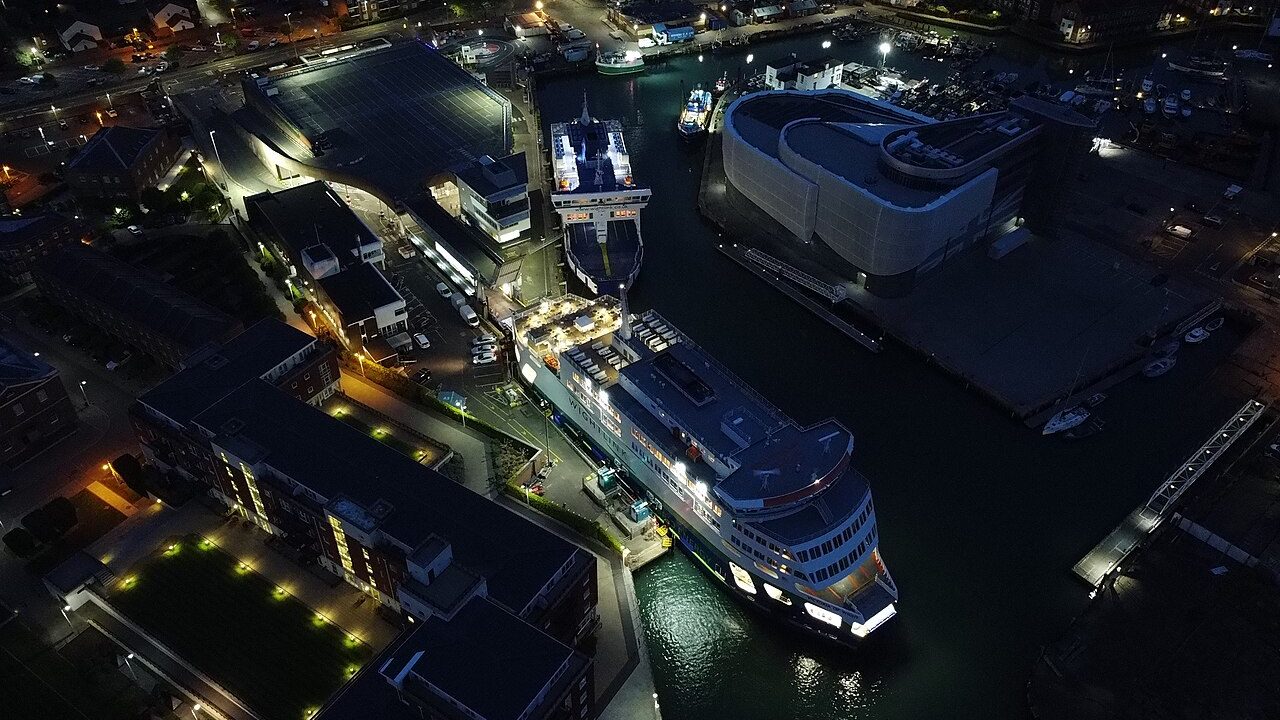
Portsmouth has three ferry terminals serving three different destinations, and driving to the wrong one costs 20 minutes and, on a tight schedule, the sailing. The Continental Ferry Port handles France and Spain, Gunwharf handles the Isle of Wight fast catamaran, and Town Quay handles the Red Funnel vehicles and ferries.
The terminals are within two miles of each other on the same harbour, which is why the confusion happens. The signs are good but they separate only at the last junction.
Terminal one: the Continental Ferry Port
This is the Brittany Ferries terminal for Caen, Cherbourg, St Malo and Santander. It sits west of the city centre, off the M275.
The entrance is signposted from the motorway as Portsmouth Continental Ferry Port. Follow that, not the general ferry signs.
Check-in closes 60 minutes before departure for cars, and the port asks for 90 minutes on overnight sailings because of vehicle volume.
The terminal building has check-in desks, toilets, a café and seating. It is functional and busy at peak times.
Terminal two: Gunwharf for the Isle of Wight catamaran
The Wightlink catamaran to Ryde leaves from a pier at Gunwharf Quays, in the middle of the shopping development. This is foot passengers and bicycles only.
Cars cannot use this service. Vehicles to the Isle of Wight go from the Wightlink car ferry terminal at Gunwharf, which is a separate entrance 300 metres away.
The catamaran takes 22 minutes and runs hourly. It is the fastest way to the island on foot.
Parking at Gunwharf is in the shopping centre car park, which is convenient and expensive. The long-stay rate is better at the port’s own car park.
Terminal three: Town Quay for Red Funnel
Red Funnel runs the vehicle ferry to East Cowes and the fast passenger ferry to West Cowes from Town Quay, on the south side of the city centre.
The vehicle ferry takes an hour and carries cars, motorhomes and freight. The Red Jet takes 25 minutes and carries foot passengers only.
The entrance is off the A33 and is well signposted from the city centre. It is a five-minute drive from the Continental Ferry Port.
Parking for foot passengers is available at the terminal and is charged per day.
Choosing the right terminal
France or Spain: Continental Ferry Port off the M275. This is the one most drivers want.
Isle of Wight with a car: Wightlink from Gunwharf or Red Funnel from Town Quay, depending on whether you want Fishbourne or East Cowes.
Isle of Wight on foot: the Wightlink catamaran from Gunwharf is fastest; the Red Jet from Town Quay is more frequent.
If you are unsure, check the operator’s own directions rather than the port’s general page. The operators maintain accurate terminal pages.
Getting to Portsmouth
From London, the A3 runs directly to the M275 and the Continental Ferry Port. The drive takes about 90 minutes outside rush hour.
The M27 from the west joins the M275 at the same point. Portsmouth is well connected by motorway on both sides.
By rail, Portsmouth Harbour station is beside Gunwharf and a short walk from the catamaran. Portsmouth and Southsea station is closer to Town Quay.
There is no station at the Continental Ferry Port. A taxi from the city centre costs about 12 and takes ten minutes.
Check-in and boarding at the Continental port
Vehicles queue in lanes beside the terminal, and check-in is at a booth or a desk depending on the operator. The process is slower than at Dover because the volumes are lower and the staff are fewer.
Passports are checked at the booth for the French routes, and at a separate desk for Spain. Allow 10 to 15 minutes.
Foot passengers check in inside the terminal and walk to the ship through a covered walkway. Boarding starts about 40 minutes before departure.
On overnight sailings, cabins are assigned at check-in. Ask for a low midships cabin if you are prone to seasickness.
Facilities and overnight stays
The Continental terminal has a café that opens early and closes late, which is useful for the 23:00 sailings.
Hotels cluster around Gunwharf and the city centre, ten minutes from the port. Several offer parking packages for ferry travellers.
There is a petrol station on the approach road and another beside the M275 exit. Fill up before boarding; fuel in France is cheaper but the drive to a station at 06:30 is a delay.
The port has no left luggage facility. Travellers on foot should use a hotel or a station locker.
Traffic and timing
Portsmouth’s road network is slow at rush hour, particularly the A3 approach and the M275 spur. Allow 30 extra minutes between 07:30 and 09:00.
The port itself is compact and the lanes move quickly outside peak season. In August, allow 20 minutes from barrier to ramp.
If you are early, the lanes hold you rather than letting you board. There is no benefit to arriving more than two hours ahead.
For an early morning sailing, staying in Portsmouth the night before is more reliable than driving down from London at 04:00.
Which Isle of Wight route to choose
Wightlink runs from Gunwharf to Fishbourne, a 40-minute crossing that lands two miles west of Ryde. It is the better route for the east of the island.
Red Funnel runs from Town Quay to East Cowes, an hour-long crossing that lands on the north coast. It is the better route for Cowes and the west.
On foot, the Wightlink catamaran to Ryde takes 22 minutes, and the Red Jet to West Cowes takes 25. Both run hourly or better.
Price both for your dates. The two operators compete and the cheaper one changes by season.
Parking at the terminals
The Continental Ferry Port has a long-stay car park beside the terminal, charged per day. It is uncovered and fills in August.
Gunwharf has a multi-storey shopping centre car park, convenient and expensive, with a long-stay rate for ferry passengers.
Town Quay has a surface car park beside the terminal, cheaper than Gunwharf and smaller.
Book parking in advance in summer. Turning up on a Friday morning in August is a poor plan.
Delays and weather
The western Channel is more exposed than the Dover Strait, and Portsmouth sailings are cancelled in weather that Dover shrugs off.
Fast craft are the first to stop. If your crossing is on a catamaran in winter, have a plan for the conventional ferry alternative.
The port publishes service updates on its website and the operators send text alerts. Register a number at booking.
If a sailing is cancelled, the operator will rebook you on the next available ship, which on this route is usually the same day.
Overnight sailings from Portsmouth
Brittany Ferries runs overnight sailings to Caen, Cherbourg, St Malo and Santander. All offer cabins and most offer restaurants.
Check-in closes 60 minutes before departure, and the port asks for 90 minutes on overnight sailings.
Boarding starts about 45 minutes before departure, and the restaurants close 30 minutes after sailing on some ships.
Eat before boarding if you want a proper meal. The self-service cafeteria stays open later than the restaurant.
Cabins are assigned at check-in rather than at booking on some fares, so ask for a low midships cabin when you hand over the reference.
The port is quiet after 21:00, and the terminal café closes at that point, so a late arrival should plan to eat before reaching the terminal building.
What to check before you leave
Confirm the terminal name on your booking. Continental, Gunwharf and Town Quay are three different places.
Confirm whether your sailing is a conventional ferry or a fast craft, because the check-in windows differ and the fast craft cancels in weather.
Check the weather forecast for the Channel. Portsmouth sailings are exposed and the western Channel is rougher than the Dover Strait.
Aim to arrive 90 minutes before departure with a car, and 60 minutes on foot.