Ferry or tunnel: which Channel crossing is cheaper for a car
For a car with two or more people in low season, the ferry is usually cheaper than the tunnel; in August, on a flexible...
 Fabrice Dejean7 min readJul 27, 2026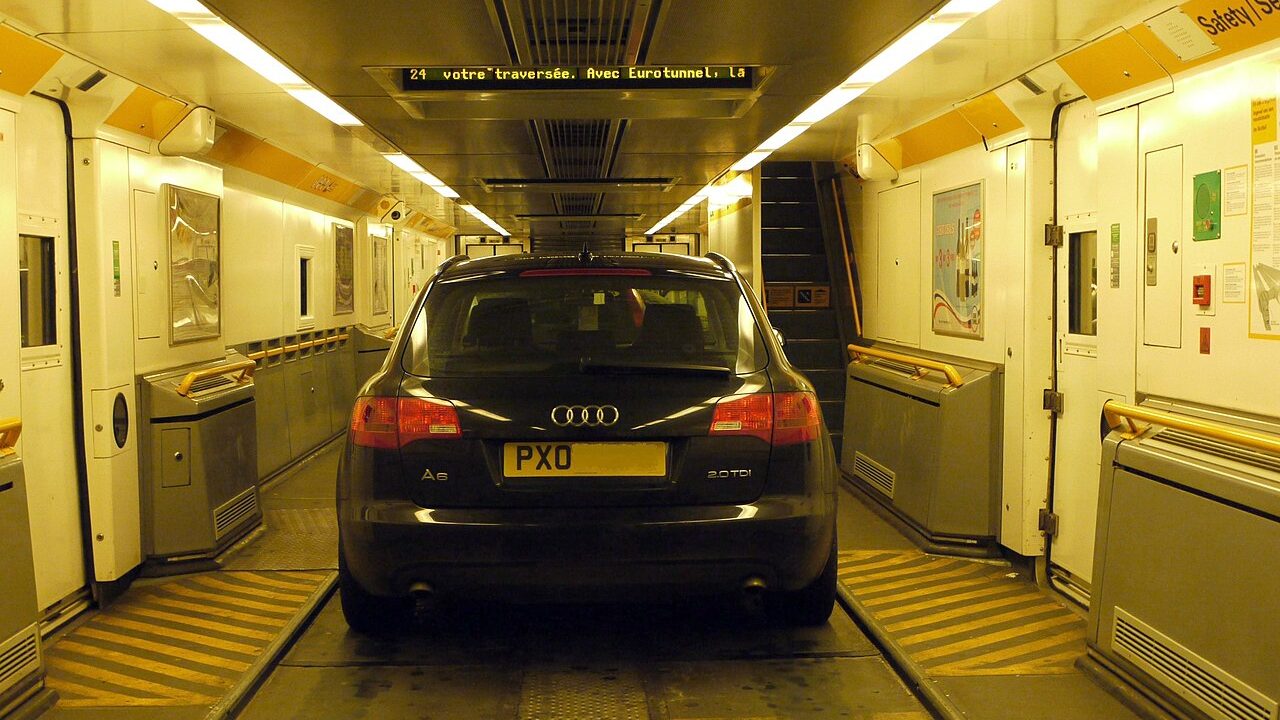
For a car with two or more people in low season, the ferry is usually cheaper than the tunnel; in August, on a flexible ticket, the tunnel often wins. The crossover depends on the fare tier more than on the crossing itself, and the difference can run from 40 to 150 each way.
Both products sell the same thing: a vehicle slot on a 35 to 90 minute crossing. What differs is how they price flexibility, how they handle peak dates and what they charge for the extras.
How the two fare structures differ
Ferry fares are tiered by flexibility, with a saver, standard and flexible ladder. The tunnel uses a similar ladder but with different names and stricter day-trip rules.
The tunnel’s cheapest fares require a fixed return within a short window, often five days or fewer. Longer stays move into a higher tier automatically.
Ferry returns are usually priced by duration too, but the bands are wider and the penalties smaller.
On a two-week trip, the ferry’s fare structure is more forgiving. On a day trip, the tunnel’s short-return fares are competitive.
The base price comparison
A car and two adults, Dover to Calais in late June: ferry saver 120 to 160 return, tunnel 150 to 210 return.
In the first week of August, the same comparison flips on some dates: ferry 280 to 380, tunnel 220 to 300.
The reason is capacity. The tunnel runs a shuttle every few minutes and can absorb peak demand; ferry decks sell out and prices climb.
Check both for your exact dates rather than relying on the seasonal pattern. The pattern is a guide, not a rule.
Time on the water versus time on the road
The ferry crossing is 90 minutes, plus 60 minutes of check-in and 20 minutes of disembarkation: about two hours 50 in total.
The tunnel crossing is 35 minutes, plus 45 minutes of check-in and 10 minutes of disembarkation: about an hour and a half.
The tunnel saves roughly 80 minutes each way. For a driver going to Paris, that is the difference between arriving for dinner and arriving late.
For a driver going to Bruges or Lille, it rarely matters. For western France, the ferry from Newhaven or Portsmouth is a different calculation entirely.
What the tunnel charges extra for
Height over 1.85 metres moves a vehicle into a higher category, and the surcharge is larger than on the ferry.
Trailers and caravans are charged as a separate vehicle category, like the ferry, but the tariffs are steeper.
Pets stay in the car for the whole crossing, and there is no charge. That is a genuine advantage over ferry pet fees of 15 to 30 each way.
LPG and dual-fuel vehicles face restrictions on the shuttle, and some are refused outright. Check before booking.
What the ferry charges extra for
Pets cost 15 to 30 each way, and pet cabins cost more again on overnight routes.
Cabins are optional on short crossings and necessary on long ones. A cabin adds 60 to 140, which can exceed the tunnel’s price advantage.
Food on board is 30 to 40 percent above port prices. A family of four eating twice adds 60 to 80 to the trip.
None of these are hidden, but all of them change the comparison at the checkout screen.
Weather and reliability
The tunnel does not close for weather. It closes for technical faults, which are rare and usually short.
The ferry cancels in severe wind, more often in winter and more often on the western Channel and North Sea routes than on Dover.
If you have a fixed appointment in Europe, the tunnel’s reliability is worth 30 to 50 on its own.
If you are driving to a holiday cottage with a flexible arrival, the ferry’s risk is manageable and the saving is real.
Flexibility and amendments
The tunnel allows a free move to an earlier or later shuttle on the same day on most fares, subject to space. That is unusual and useful.
Ferry operators charge 20 to 45 for a same-day change on a saver fare, though many will move you free if you arrive early and space exists.
On a full sailing, neither will board you early. In August, arriving early means waiting.
If your plans are unreliable, price the flexible tiers on both. The comparison changes when flexibility is included.
Three worked comparisons
Couple, long weekend in Bruges, June: ferry 140 plus 20 of on-board food, tunnel 180 with no food. Tunnel costs 20 more and saves 80 minutes each way.
Family of four, two weeks in Provence, August: ferry 340 with a cabin 120, tunnel 300. Ferry costs 160 more but lands 250 miles closer to the destination.
Solo driver, day trip to Calais for shopping, November: ferry 90, tunnel 110, ferry wins on price by 20 and loses 80 minutes each way.
Notice that the answer changes with party size and destination, not with the crossing itself.
When the ferry clearly wins
Western France, Brittany, Normandy and the Atlantic coast, where the western Channel ports put you hours ahead.
Any trip with a caravan, a motorhome or a trailer, where the tunnel’s vehicle categories are expensive.
Any trip where the crossing is part of the holiday, such as a family with children who want a deck and a view.
Any trip where the destination is within 90 minutes of a ferry port and the ferry fare is 100 lower.
When the tunnel clearly wins
Paris, Belgium, the Rhineland and anything where arrival time is fixed.
Day trips and short returns, where the tunnel’s fare structure is designed for exactly that shape of trip.
Winter crossings, where the ferry’s weather risk is real and the tunnel’s is negligible.
Pets, where the tunnel charges nothing and the ferry charges per animal each way.
What the tunnel does better
It runs every few minutes, so a missed slot is a short wait rather than a lost day. That matters on the return leg when traffic is unpredictable.
It never closes for weather, which makes it the only crossing that can be relied on in a January gale.
Pets stay in the car for 35 minutes at no charge, which is simpler and cheaper than the ferry’s kennel and fee arrangements.
And it is faster. Thirty-five minutes against ninety, with shorter check-in, is worth an hour and a half of anyone’s day.
What the ferry does better
It goes to more places. Newhaven, Portsmouth, Poole, Plymouth and Harwich serve destinations the tunnel cannot reach without a long drive.
It carries caravans, motorhomes and trailers more cheaply, because its vehicle categories are less aggressive.
It has cabins, restaurants and decks, which on a long crossing is the difference between transport and a night away.
And on a full car in low season, it is simply cheaper by 40 to 100 each way.
The height and caravan problem
The tunnel’s height limit for a standard car is 1.85 metres. Above that you move to a high-vehicle category with a much higher fare.
A car with a roof box often crosses that line. On the ferry the same car may stay in the standard band if the operator’s threshold is 2.0 metres.
Caravans and trailers are charged separately on both, but the tunnel’s tariffs are steeper and its booking rules are stricter about combined lengths.
If you tow, price the ferry first. The tunnel is rarely the cheaper option with anything on a hitch.
Booking both and deciding later
It is legitimate to hold a flexible ferry booking and a flexible tunnel booking for the same dates, then cancel one. Both allow cancellation, with fees.
The fees, 10 to 25 each, are the cost of optionality. If the weather forecast or your plans are uncertain, that is a reasonable price.
Do not hold two non-refundable bookings. That is not optionality, it is paying twice.
Decide 72 hours before travel, when the forecast is reliable and your plans have settled.
How to decide in ten minutes
Price both for the exact dates and the exact vehicle. Include pets, cabin, food and any height surcharge.
Add the driving time from each arrival port to your destination, at 60 mph on motorways and 45 on secondary roads.
Then ask what a missed connection would cost. If the answer is a hotel night, the tunnel’s reliability premium is justified.
Book the cheaper total, not the cheaper fare. The two are different numbers more often than people expect.