Norwegian coastal ferries: fjord routes and the car ferry rules
Norway runs ferries the way other countries run buses: as part of the road network, priced by distance and booked by turning up. The...
 Fabrice Dejean7 min readMay 10, 2026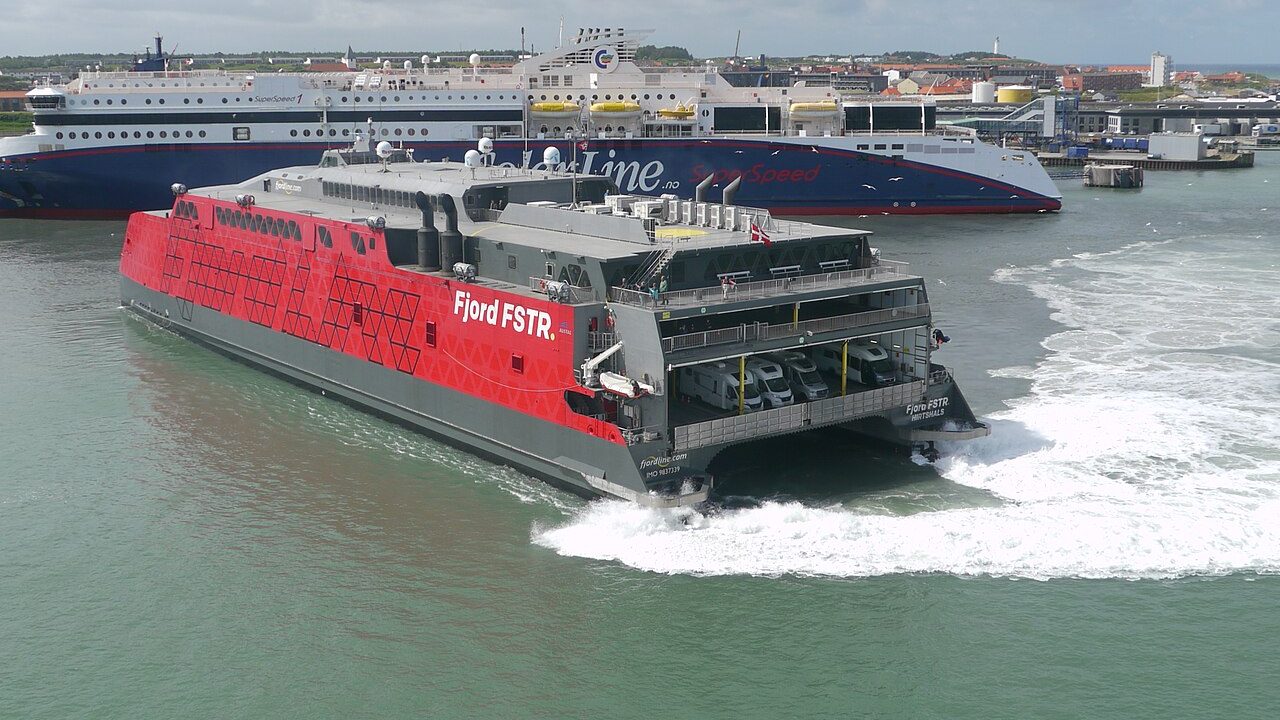
Norway runs ferries the way other countries run buses: as part of the road network, priced by distance and booked by turning up. The fjord crossings are short, frequent and cheap, and they are the reason a Norwegian road trip works at all.
The coastal express route along the coast is a different product entirely: a 12-day voyage with cabins, meals and stops at 34 ports, priced like a cruise rather than a ferry.
The road ferries
Norway has around 130 car ferry routes on its public roads, most of them crossings of 10 to 30 minutes across a fjord or a sound.
They run every 20 to 60 minutes from early morning to late evening, and some run through the night.
Fares are charged per vehicle and per passenger, and they are set by the road authority rather than by the operator.
They are not bookable in advance and they do not need to be. You drive up, pay at the barrier or by app, and board the next ship.
How the pricing works
A car under six metres costs roughly 100 to 250 NOK per crossing, with passengers included on some routes and charged 30 to 60 NOK each on others.
Motorhomes are charged by length and can pay 300 to 600 NOK for the same crossing.
Payment is by card at the barrier, by AutoPASS tag or through an app. Foreign cards work.
The rates are published on the road authority’s site and are the same whoever operates the boat.
Booking and queueing
There is no booking. You join the queue and board in order, which is why the ferries are the one part of a Norwegian road trip you cannot plan precisely.
In summer, the queue at the busiest crossings, such as Bognes to Lødingen or Hellesylt to Geiranger, can be an hour.
Arrive early in July and August, or cross outside the peak hours of 10:00 to 16:00.
Tickets are sold at the barrier or on board, and the ship will not leave without you if you are in the queue.
The Geiranger fjord route
The Hellesylt to Geiranger ferry is the most scenic car ferry in Norway, an hour through the UNESCO-listed fjord with waterfalls on both sides.
It runs only in summer, usually from May to September, and carries cars and passengers.
The fare is higher than a standard crossing at 300 to 500 NOK for a car, because it is a tourist route rather than a road link.
It is worth the money, and the alternative is a three-hour drive around the fjord.
The Atlantic Road and its ferries
The Atlantic Road is a series of bridges, but the region depends on ferries to connect the islands beyond it.
The Halsa to Kanestraum crossing and the Mortavika to Arsvågen route are the main links, both 20 to 25 minutes.
These crossings are part of the E39 and run frequently day and night.
They are also the routes that make a west coast road trip feasible without long detours.
The Bergen to Kirkenes coastal express
Hurtigruten and Havila run daily departures from Bergen to Kirkenes, calling at 34 ports over 12 days.
It is a working ship carrying freight, cars and local passengers as well as tourists.
Fares depend on cabin class and include meals on some packages. A full voyage costs 2,000 to 6,000 per person.
Short segments are sold, which is how many travellers use it: two nights from Bergen to Trondheim, for example.
Cars on the coastal express
Cars can be carried on some segments and not on others. The ship is a working vessel and vehicle space is limited.
Booking a car must be done by telephone or through an agent, not on the website.
Most travellers on the coastal express travel without a vehicle and pick one up at the far end.
If you need a car, the road ferries are the practical way to move one along the coast.
Electric ferries and the future
Norway operates the world’s largest fleet of electric ferries, with battery-powered vessels on many short crossings.
They are quiet, smooth and cheaper to run, and the fares have not fallen as a result.
Charging happens at the quay during the turnaround, which is why the crossings are short and the timetables tight.
The technology is spreading to longer routes, and several hydrogen ferries are in service.
What the crossings are like
Most are 10 to 25 minutes with a lounge, toilets and a kiosk selling coffee and waffles.
Passengers stay in the car on some routes and must leave it on others. Follow the crew’s instructions.
The views from the deck are the point, particularly in the fjords, and the ships have open deck space for it.
Weather affects comfort but rarely cancels the crossings, because they are sheltered and short.
Driving in Norway
Speed limits are low, enforcement is strict and the fines are high. A 20 km/h overspeed costs 5,000 NOK or more.
Tunnels are long and numerous, and some have roundabouts inside them. Headlights are mandatory at all times.
Fuel is expensive, and electric cars are common. Charging infrastructure is excellent on main routes.
Winter driving requires winter tyres from November, and many mountain roads close entirely.
The cost of a road trip
A west coast trip using six ferries costs 800 to 1,500 NOK in ferry fares for a car and two passengers.
Fuel for 600 miles is 700 to 900 NOK, and tolls add 200 to 400.
Accommodation is the largest cost, at 1,000 to 2,000 NOK a night for a hotel and 300 to 600 for a campsite.
The ferries are not the expensive part, which is why nobody books them in advance.
What to book first
Book accommodation first in summer, particularly in Geiranger, Flåm and the Lofoten islands.
Book the coastal express months ahead if you want a specific cabin, and book the car separately by telephone.
Do not book road ferries. Turn up and queue.
Check the road authority’s site for ferry times on the specific route, because the summer timetable may differ from winter.
Foot passengers and cyclists
Foot passengers pay a small fare and board first on most routes. Some crossings are free for pedestrians.
Cyclists are common on the fjord routes and are usually carried free or at a nominal charge.
Bikes are loaded by hand and stored on deck, and the crew help if asked.
Touring by bike and ferry is one of the best ways to see the fjords without a car.
The ferry as part of the road
In Norway, a ferry crossing is legally part of the road, which is why the fare is fixed, the timetable is published by the road authority and the service cannot simply be withdrawn.
That also means the ferries run in weather that would close a tourist route, because the alternative is cutting off a community.
It is why a Norwegian road trip feels less like booking transport and more like driving through a country with water in the way.
Treat the crossing as a pause in the drive rather than an event, and the trip becomes much easier to plan.
What to eat and where to stop
The kiosks on board sell coffee, waffles and simple sandwiches, and the waffles are better than they need to be.
Many crossings have a small shop selling local produce and hot dogs, and the prices are reasonable for Norway.
Eating ashore is expensive, so a ferry hot dog is a legitimate budget strategy rather than a compromise.
Fill a flask before boarding. Coffee on board costs 30 to 45 NOK a cup, and the kiosk queue at the start of a crossing is longer than the crossing itself.
What catches visitors out
Assuming a booking is possible. It is not, on the road ferries.
Assuming the fare is fixed. Motorhome length changes it substantially.
Assuming the ferry runs late at night. Some routes stop at 20:00 and resume at 06:00.
Assuming a scenic route runs in winter. Several, including Geiranger, are summer-only.